|
|
|
.jpg)

Musician's Portraits (PDF)
|



The Swiss ensemble TRITONUS will
surprise you with folk music of a completely different kind.
|
|
|
|
|


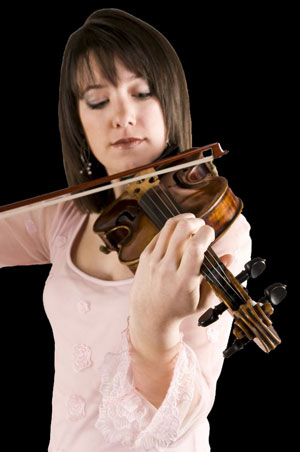

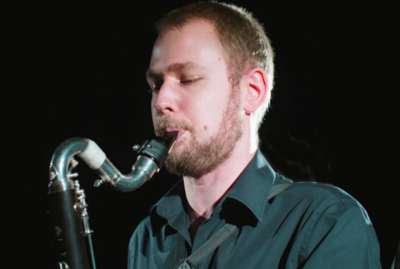
Biography / Artist Information:
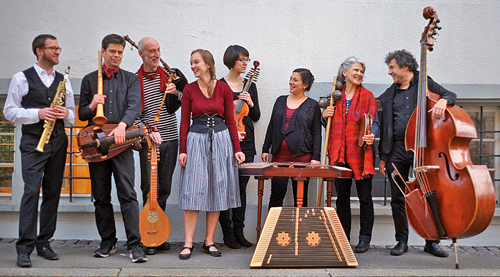
TRITONUS is a Swiss folk music ensemble which was founded
around 1985 in the Eastern Part of Switzerland. They count as pioneers
and experts in the investigation and performance of ancient folk music
and their instruments in Switzerland before 1800.
Their 1991 standard work ‹TRITONUS – Alte Volksmusik in der Schweiz› (‹Early Folk-Music in Switzerland›) won the ORG (Eastern Swiss Radio and Television) Award and is still on sale today.
In 2006 Tritonus was breaking new ground with their album ‹Alpan›,
a fresh but respectful rendering of early Swiss folk music. Together
with young jazz musicians they created a programme that combines the
past and future of Swiss folk music: Having pieced together original
instrumentations, they can demonstrate early musical styles, melodies,
texts and instruments and mix them with new sounds to show possible
future directions. The majority of the tunes and songs are unpublished
works that have not been previously recorded. It‘s an exciting
musical journey where the familiar can suddenly sound very different!
Tritonus was awarded a support grant by the Culture Foundation of the
Canton of Appenzell Ausserrhoden for their ‹Alpan
Project›.
In autumn 2010 the band toured
China and played in Shanghai (World Expo, Lake Malaren Music
Festival), Su Zhou and Zhenjiang.
In 2011 Tritonus was working on their new programme ‹Swiss, Swede, Wine and Wife› which deals with the three pivotal questions of mankind: Where have we come from? Where are we going? And – possibly – most importantly: What we’ll drink along the way?
In 2015 Tritonus released their third album ‹urbanus
- Early folkmusic from Swiss cities›. A night watchman takes
the listeners through his nightly patrol of the city, watching happy
or sad lovers, cross the marketplace towards taverns and to secred,
dark corners.
Dances from 16th century lute tabulatures, songs and ballads
are brought back to life in sophisticated arrangements, enriched with
new texts and melodies in the spirit of old Swiss folk music. Tritonus
adds the baroque sounds of double bass, large and small violone, viola
d'amore and chalumeau, as well as those of modern instruments such as
soprano saxophone and bass clarinet to the rich tones of old folk music
instruments such as bagpipes, shawm, hurdy-gurdy and hammered dulcimer.
 |
‹ ... Tritonus’ Urbanus opus is a 24-track master-piece› |
Review in Folk Roots - the essential worldwide folk & roots music guide; No. 386, Aug. 2015 / read full review PDF |
The story of Tritonus goes back to before 1980. Urs
Klauser and Beat
Wolf , both of them instrument makers and musicians,
were united in their interest in old folk music of varied provenance,
and in their desire to research thoroughly the Swiss
folk music of previous centuries. They reconstructed instruments according
to historical models, and on these, they brought the melodic material
that they had discovered to new life, as it would originally have
sounded. At the centre of their interest were instruments such
as the Swiss bagpipe,
the shawm, the cittern,
the fife,the hurdy-gurdy and
the Jew's harp. These
were the instruments that had been popular and widely spread until
they were superseded in the 19th century, primarily by the accordion
(the so-called "Schwyzerörgeli"). The price-winning
first Tritonus-CD ‹Early
Folk-Music in Switzerland› (1991) marked a turning point
in research into these old traditions.
After fifteen years after this CD appeared - it has since become a 'standard
work' - Tritonus ventured with their ‹Alpan
Project› into new musical territory, with added personnel. Together
with young jazz musicians, they created a repertoire that unites tradition
and innovation, the origins and future of our folk music. Most of the
pieces in this repertoire come from sources that are either unpublished
or difficult to access. One of their focal areas is the music of Canton
Appenzell, though not the well-documented, well-loved string music of
the 19th and 20th centuries. Tritonus present 'Alpsegen' (the dusk-time
prayers sung in the mountains), 'Zäuerli' (a type of yodelling
from Appenzell), ranz des vaches, ranz des chèvres, 'Löckler'
(cow-call tunes) beneath dance tunes, ballads and love songs.
Archaic Swiss folk music mingles here with new sounds – This is
a colourful, varied, intensive music!
International Folk Music Festival ‹Alpentöne›, Altdorf, Switzerland 2007
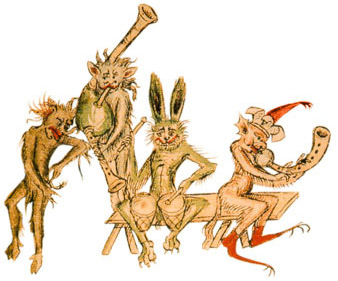
ANCIENT SWISS FOLK MUSIC
The Early
Swiss Folk Music differs greatly from the popular
present day forms such as the "Ländler" (country waltz)
and the yodel song. How, then, did our folk music sound before
1800? Musicological research has brought much to light but,
so far, practically no folk music instrumental arrangements
have resulted from this research.
Since many years we (U.Klauser
and B.Wolf) have been reconstructing old musical instruments
and using them to play early folk music in the group TRITONUS.
Fortunately, various
folk music pieces have been preserved in the old sources:
From artistic 16th century
lute tabulatures we have reconstructed instrumental arrangements
as they probably were played by early folk musicians. Also, several
Swiss folk music collections were made in the 19th and early
20th centuries with the purpose of preserving older folk traditions.
From these collections we obtained several "jewels". The words
of old songs and ballads were more frequently handed down because
the long texts were often written down whereas the original melodies
are usually missing.
The typical Swiss alpine "Kühreihen" (cow
calling melodies) are quite old and reached into the realm of
magic. A characteristic of this oldest Swiss folk music is the
lydian mode with the
"tritonus" of the augmented 4th in the natural tone sequence.
This "devilish" interval gave our group its name.
How, and with what instruments,
earlier music was played is shown by an extensive iconography
which, together with the critical analysis of the written sources,
led us to the present results. Many of the instruments we used,
such as the bagpipe (Sackpfeife), shawm (Schalmei), hurdy-gurdy (Drehleier)
and rebec, have
died out in Switzerland. Other instruments, such as the hammered
dulcimer (Hackbrett), cittern (Cister)
and fife (Schwegel),
are traditional Swiss folk instruments which have survived up
to the present day.
Translation: Dale Overturf
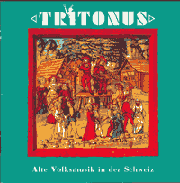 |
Tritonus "Alte Volksmusik" (Early Folk Music In Switzerland) (Review: good) TRITONUS have done a lot of valuable research in reconstructing defunct instruments and resurrecting a musical tradition that has fallen in abeyance.
|
||
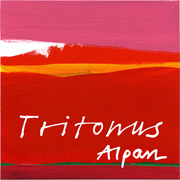 |
Tritonus Alpan (Review: good) Swiss traditional material, but no yodelling,
alphorns or oompah.
|
||
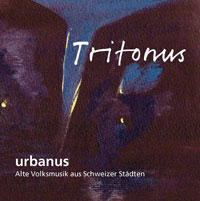 |
Tritonus urbanus -
Early Folk Music From Swiss Cities
|